


Stillark
Stillark is a Copenhagen architecture studio working with bespoke kitchens. Here are the ideas behind the furniture collection: simplicity, function and good craftsmanship, carried from architecture into furniture.

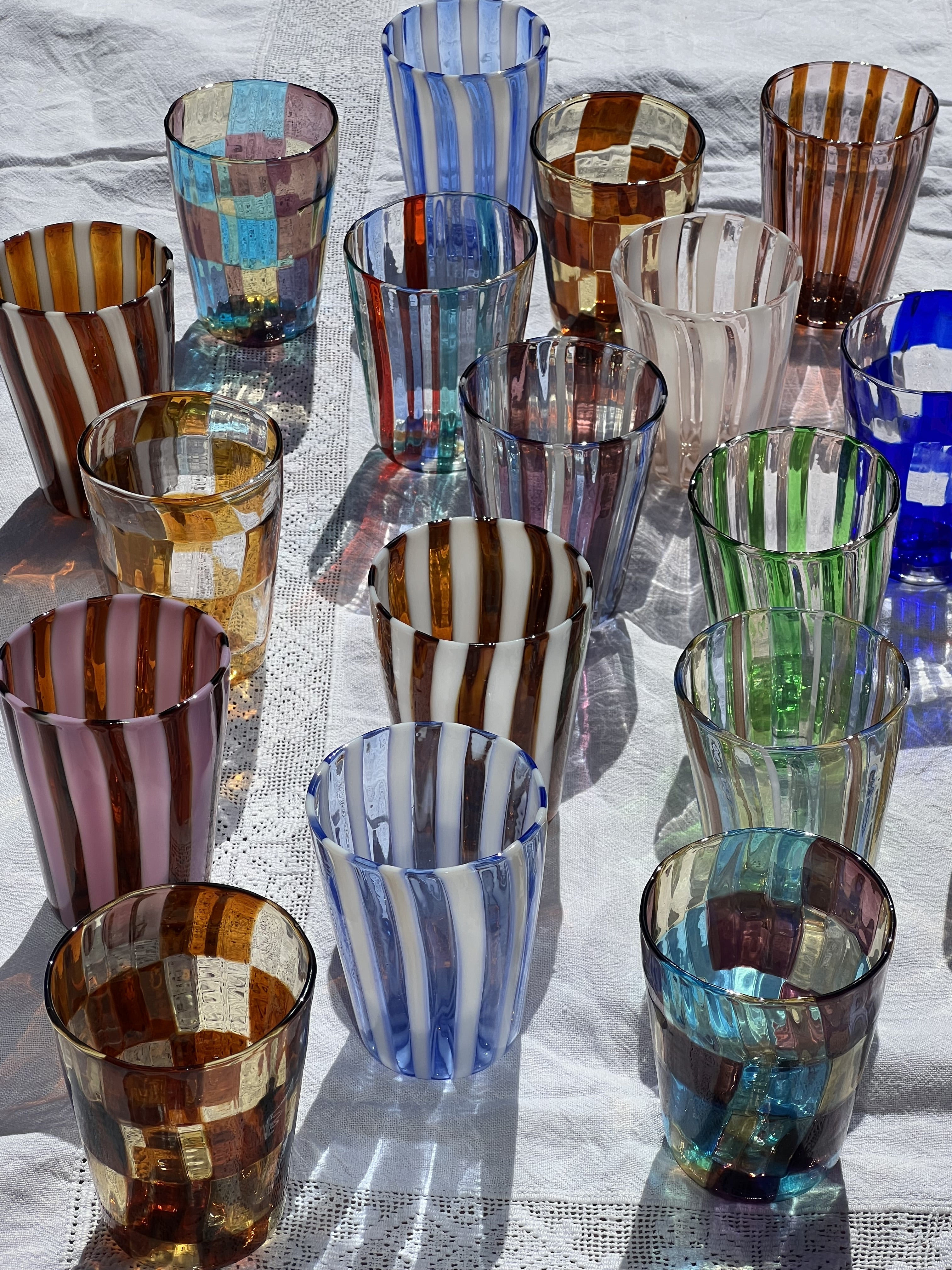
Colour, form and centuries of glassmaking. On the island of Murano near Venice, generations of glassmakers have developed and refined their craft - and created the glass tradition the island is still known for today.

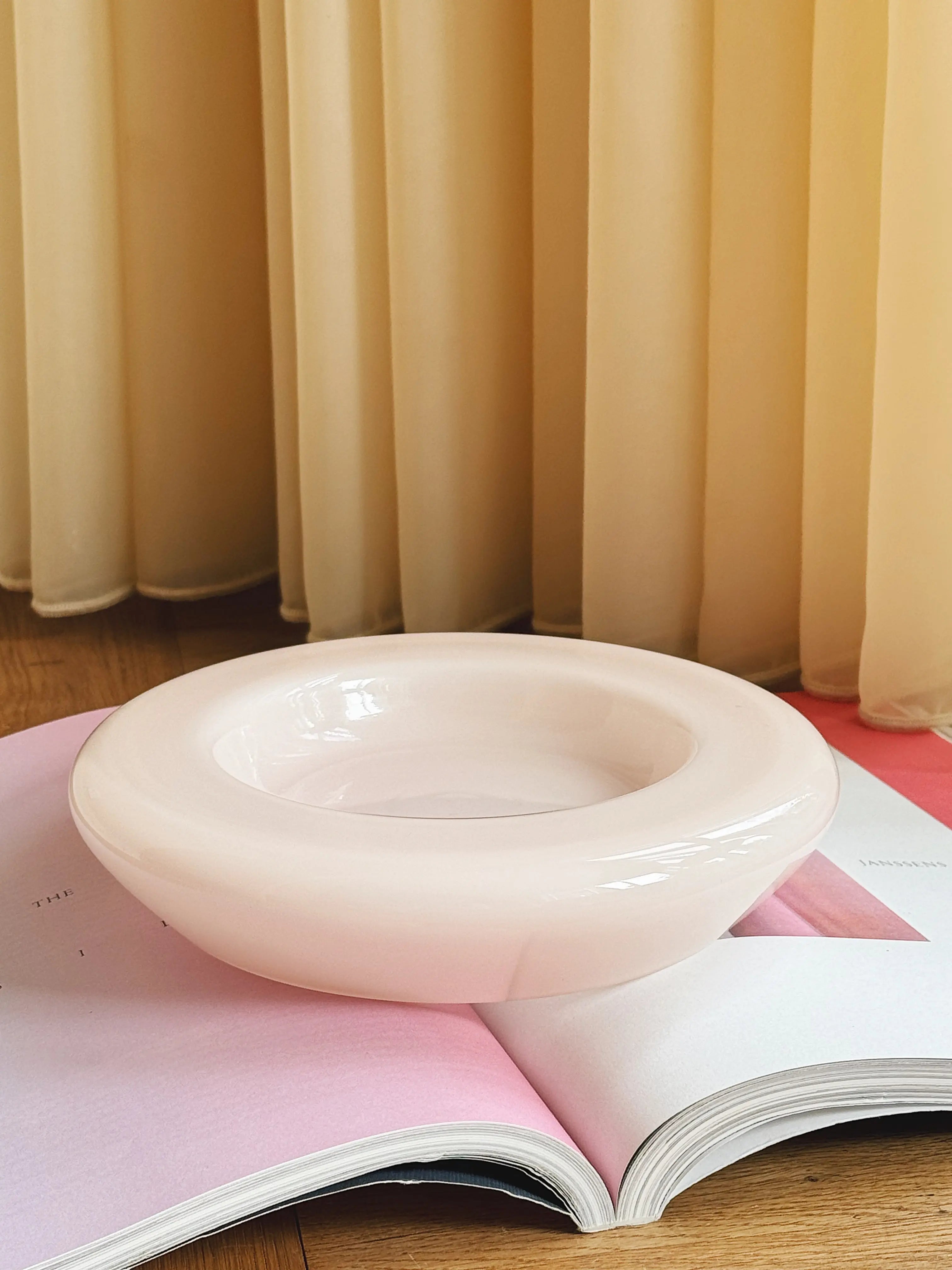
Murano is located in the Venetian Lagoon, close to Venice, and has been a centre of glassmaking since the Middle Ages. In the second half of the 13th century, several glass furnaces began to establish themselves on Murano, and in 1291, Venice’s Great Council decided to move the glass furnaces away from central Venice to reduce the risk of fire.
That was the beginning of Murano’s role as a centre of glassmaking, where over the following centuries the glassmakers developed new techniques and worked on with colour, form and decoration. In time, Murano became known far beyond Italy’s borders for its glass craftsmanship.
After the move in 1291, Murano became the place where the glassmakers could experiment in peace. In the 15th century the glassmaker Angelo Barovier is credited with cristallo - an almost colourless, clear glass that had no equal in Europe at the time. The Barovier family name can be traced on Murano back to the late 1200s, and the family still makes glass today.
When the Venetian Republic fell in 1797, the island's workshops declined. The revival came in 1859, when Antonio Salviati, together with Lorenzo Radi and Enrico Podio, founded the company that set modern Murano production in motion - and which in 1864 won a gold medal at the first exhibition for glassmakers.
The 20th century became Murano's design era. In 1921 the Milanese lawyer Paolo Venini, together with the Venetian antiques dealer Giacomo Cappellin, founded the firm Vetri Soffiati Cappellin Venini & C., with Vittorio Zecchin as its first artistic director. The two went their separate ways in 1925, but the Venini name remained one of the most significant on the island. The 1950s and 60s brought the shapes many people associate with Murano today: heavy sommerso vases with layers of colour inside the glass, designed by Flavio Poli at Seguso Vetri d'Arte, and the vivid swirl and filigrana patterns.


Much of Murano’s distinctive character comes from the way the glass is worked. The glass is shaped while it is still hot, and many traditional techniques rely on freehand craftsmanship, where the glassmaker’s experience and movements are crucial to the final result. Museo del Vetro describes freehand shaping as a technique that is still closely associated with Murano’s master glassmakers today.
That leaves room for the organic shapes, the play of colour and the details that characterise so much of Murano glass.
Much of what makes Italian glass from Murano so distinctive lies in the techniques. Most of them have Italian names, and they come up again and again in the descriptions when you look at the glass:


The base of Murano glass is the same as it has been for centuries: quartz sand melted together with soda, lime and potash at around 1,400 degrees. It is the additions that make the difference.
The colours in Murano glass do not come from paint on the surface, but from metal oxides melted into the glass itself. Cobalt gives blue, manganese gives violet and amethyst, iron and chromium give the green tones, and compounds of gold or copper give the deep red that has historically been the most expensive to produce.
That is also why the colour in genuine Murano glass cannot wear off. Hold the glass up to the light and the colour runs all the way through.
The play of colour shows best where the light is allowed to work: in our Murano drinking glasses and in the mouth-blown Murano vases.


Murano is not one workshop but many. Some names come up again and again when you look at vintage glass: Venini, Barovier & Toso, Seguso Vetri d'Arte, AVEM (Arte Vetraria Muranese), Cenedese and Michielotto. Alongside them there have always been a large number of smaller workshops that did not sign their work, and whose glass is most often traded without a name today.
Provenance is therefore rarely something you can simply look up. We describe what we know for certain about each individual piece, and leave the rest unguessed. If you want to know more about labels, marks and the characteristics to look for, we have gathered them in our guide to recognising genuine Murano glass.


At Studio Hafnia, you’ll find a selection of hand-blown Murano glass, vases, jugs and carafes, as well as carefully selected vintage finds.
We love Murano glass for its combination of traditional craftsmanship and the many colours, patterns and shapes that continue to make each piece unique in the home today.
Drinking glasses, carafes and jugs are our own collection. They are blown by hand today using the same techniques the island has always worked with - so they are not vintage. Bowls and lamps, on the other hand, are vintage finds. The vases are both: the great majority are vintage from the 1950s to the 1970s, while a smaller selection is mouth-blown for us today. It always says on the individual product which one you are looking at.
From colourful drinking glasses on the table to a hand-blown Murano vase on the windowsill, each piece carries a glassmaking tradition that has been developed over centuries.


Explore our Murano universe, from mouth-blown drinking glasses and lamps to specially selected vintage finds.
No. Murano glass is glass made on the island of Murano in the Venetian lagoon. A good deal of the glass sold to tourists in Venice is produced elsewhere.
Both. Drinking glasses, carafes and jugs are our own collection and are blown by hand today. Bowls and lamps are vintage. The vases are both - most are vintage finds, a smaller selection is new. It always says so on the individual product.
A lamp with a shade or base in mouth-blown glass from Murano. The best known shapes are the mushroom lamp with its dome-shaped shade, the globe lamp shaped like a round sphere, and the large chandeliers. The table lamps we find are typically from the 1960s and 70s, when the swirl and filigrana patterns were at their strongest. See them in our Murano lamps.
The price follows the technique, the size and whether the piece can be linked to a particular workshop. A mouth-blown drinking glass costs a few hundred kroner, while a signed sommerso vase from a well-known house can run into many thousands. The vast majority of pieces are unsigned, and there the craftsmanship, the play of colour and the condition decide the value - not a name on the base.
Because it is mouth-blown. Small bubbles, a slight lean or variations in the thickness of the glass are traces of the hand that shaped it - not flaws.
That is the pontil mark. The pontil rod holds the glass while it is finished, and when it is broken off it leaves a mark on the base - either rough or ground smooth.
Our own mouth-blown drinking glasses and carafes are dishwasher safe, but we recommend washing by hand in lukewarm water. Mouth-blown glass keeps its shine longest when washed by hand. Vintage finds should always be washed by hand - the glass is often thinner and has lived a long life.
Place the glasses individually rather than stacking them, and avoid sudden changes in temperature. Mouth-blown glass does not tolerate going straight from cold to boiling water.
In practice, yes. The glass is shaped by hand, and even when two pieces are the same model, the play of colour, the pattern and the form will never be quite identical. That applies to both our own collection and the vintage finds.

Godthåbsvej 50, ground floor right
2000 Frederiksberg
Come by and see the Murano glass in person - the colours and the thickness of the glass are hard to capture in a photograph. Write to us if you’d like to stop by.


